Gender-Based Violence in the Eastern Province of Sri Lanka: Challenges, Context, and Responses
Gender-based violence in Batticaloa, Trincomalee, and Ampara is shaped by conflict, displacement, and inequality, posing serious human rights and development challenges in Sri Lanka.
 editor

Gender-based violence (GBV) refers to harmful acts directed at individuals based on their gender. It encompasses physical, sexual, psychological, and economic abuse, disproportionately affecting women and girls but also impacting men and gender minorities. In Sri Lanka’s Eastern Province—comprising Batticaloa, Trincomalee, and Ampara Districts—issues of GBV are deeply intertwined with historical conflict, displacement, socio- economic inequalities, and cultural norms, making it both a human rights and a development concern.
Forms of Gender-Based Violence in the Eastern Province
Intimate partner and domestic violence remain the most commonly reported forms of GBV in the Eastern Province. Survivors frequently describe experiences of physical assault, sexual coercion within marriage, verbal humiliation, psychological abuse, and strict control over income, mobility, and decision- making. Factors such as alcohol abuse, unemployment, and unresolved war-related trauma are often cited as key contributors to this form of violence. In addition, women and girls face sexual violence and harassment in both private and public spaces, including rape and sexual assault, harassment in public transport and workplaces, and abuse during displacement or migration for employment. Adolescent girls and women with disabilities are particularly vulnerable to these forms of abuse due to heightened dependency and limited access to protection mechanisms. Beyond direct physical and sexual harm, economic and
structural violence further exacerbate women’s vulnerability. Widows, female-headed households, and women from marginalized ethnic and religious communities frequently face denial of land and property rights, exploitative labor conditions, and barriers to accessing state assistance. These forms of structural violence deepen economic dependency and often trap survivors in abusive environments, limiting their ability to seek safety and justice.
Contributing Factors
Gender-based violence in Sri Lanka’s Eastern Province is driven by a combination of deeply rooted socio-cultural, historical, and structural factors. Patriarchal attitudes and rigid gender norms remain deeply embedded in many communities, shaping beliefs and behaviors that normalize domestic violence and discourage women from reporting abuse. Survivors of sexual violence and intimate partner violence often face strong cultural stigma, victim-blaming, and
social isolation, leading many to suffer in silence rather than seek support. These challenges are further compounded by the legacy of war and large-scale displacement, which disrupted family structures, community networks, and traditional protection mechanisms. Research has shown that the instability experienced during and after displacement has increased vulnerability to gender-related abuse, with conditions in displacement camps and weakened social support systems contributing to rising cases of sexual and gender-based violence in post-war areas such as Eachchilampattai in the Trincomalee District. Additionally, despite national-level commitments to address GBV, access to survivor-centered services remains limited, particularly in rural and conflict-affected parts of the Eastern Province. Fear of retaliation, lack of confidentiality, and low confidence in institutional responses continue to deter survivors from
seeking legal, medical, or psychosocial support.
National and Regional Statistics
National surveys indicate that one in three women in Sri Lanka experiences physical or sexual violence during her lifetime, highlighting the widespread nature of gender-based violence across the country. Police data and reporting by civil society organizations consistently show higher levels of vulnerability in post-conflict regions, including the Eastern Province. Localized studies conducted in parts of Batticaloa District reveal that more than 70 percent of women surveyed have experienced at least one form of domestic violence, whether physical, sexual, emotional, or economic. Women-led organizations operating in the Eastern Province further report a notable increase in complaints during periods of economic crisis, natural disasters, and the post-pandemic period, particularly relating to intimate partner violence and economic abuse. However, these statistics likely represent only a portion of the actual prevalence of GBV, as underreporting remains widespread due to fear of retaliation, social stigma, and limited trust in formal institutions.
Civil Society, Government, and International Responses
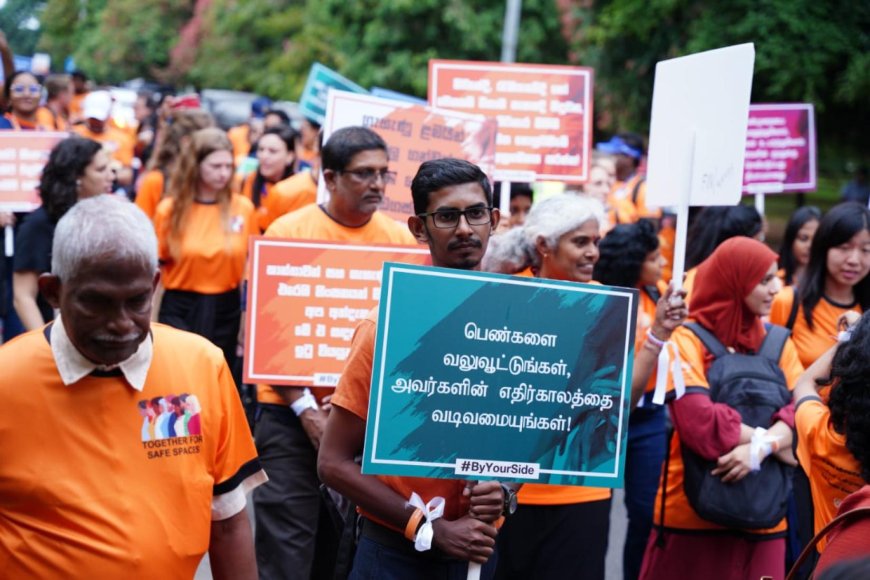
Civil society organizations play a crucial role in addressing gender-based violence in Sri Lanka’s Eastern Province by providing survivor-centered services and community-level interventions. Organizations such as Women In Need (WIN) offer critical support to GBV survivors through emergency shelters, women- and child-friendly police desks, psychosocial counseling, and legal assistance. With operations in Batticaloa and other districts, WIN provides safe spaces and
direct services to women and girls affected by violence, particularly those with limited access to formal justice mechanisms. Other organizations, including the Eastern Social Development Foundation (ESDF), focus on empowering vulnerable women and minority communities affected by war and GBV by promoting rights awareness, peacebuilding initiatives, and inclusive community development. Similarly, the PADEM project in Batticaloa works to strengthen
women’s networks, enhance judicial and institutional capacities, and provide care and support services for survivors of sexual violence, contributing to both prevention and response efforts at the local level. Alongside civil society initiatives, government institutions—often in collaboration with international partners—have taken steps to improve institutional responses to GBV. In partnership with UNFPA, Sri Lanka has established Emergency Waiting Areas (EWAs) at
selected police stations to ensure safe, confidential, and survivor-friendly spaces for reporting violence, as well as access to immediate assistance and counseling. This initiative has helped improve survivors’ access to support services in districts such as Batticaloa, where trust in law enforcement has historically been low. At the policy level, the Multispectral National Action Plan on Sexual and Gender-Based Violence (2024–2028) aims to strengthen prevention strategies, coordinated response mechanisms, and protection systems across the country, with important implications for enhancing GBV prevention and survivor support in the Eastern Province.
Challenges and the Way Forward
Despite notable progress in policy development and service provision, significant challenges continue to limit effective responses to gender-based violence in Sri Lanka’s Eastern Province. Underreporting remains widespread, as many survivors are deterred from seeking help due to fear of social stigma, retaliation, and damage to family or community relationships. Although support services have expanded in recent years, resource and accessibility gaps persist, particularly in rural and remote areas where shelters, trained counselors, and legal assistance are often unavailable or difficult to reach. Additionally, the deeply entrenched gender norms and patriarchal attitudes that sustain GBV cannot be addressed through short-term interventions alone; they require sustained, long-term community engagement, education, and dialogue involving men, women, and youth alike. Moving forward, a comprehensive and coordinated
approach that integrates strong legal protection, survivor-centered support services, community awareness programs, and women’s economic empowerment will be essential to effectively prevent GBV and support survivors across the Eastern Province.
Recommendations
Addressing gender-based violence in Sri Lanka’s Eastern Province requires a coordinated and survivor-centered approach. Strengthening gender-sensitive policing and judicial responses is essential to ensure survivors receive timely protection, dignity, and justice. There is a critical need to expand psychosocial support and safe shelter services in rural and conflict-affected districts, where access remains limited. Long-term investment in community education on gender equality is necessary to challenge harmful norms and prevent violence before it occurs. Equally important is the economic empowerment of women survivors through livelihood support and access to resources, enabling them to rebuild their lives with independence and security. Finally, women—particularly those from post-conflict and marginalized communities—must be meaningfully included in decision-making processes to ensure policies and interventions
reflect lived realities and local needs.
Conclusion
Gender-based violence in Sri Lanka’s Eastern Province is both a manifestation of broader structural inequalities and a consequence of the region’s history of conflict and displacement. Addressing it requires more than legal and institutional reforms; it demands grassroots engagement, culturally sensitive and survivor-centered services, and sustained efforts to transform harmful social norms. Continued collaboration among government institutions, civil society organizations, and international partners is crucial to strengthening prevention and response mechanisms and to ensuring a safer, more just, and equitable future for all individuals, regardless of gender.
(This article has been written under the Women’s Activism Program on Violence Against Women of the Ewing Independent Center for Women and Children.)
Keshayinie Edmund