Interview with Laxmanan Sanjeev: The road to accountability for disappeared Tamils
International human rights activist and legal advisor Laxmanan Sanjeev discusses the next phase of efforts by the Association for Relatives of the Enforced Disappeared of the North and East of Sri Lanka (ARED) to pursue truth, justice and accountability for disappeared Tamils. He outlines the importance of systematic documentation, evidence preservation and sustained engagement with UN human-rights mechanisms, including the Working Group on Enforced or Involuntary Disappearances, the Committee on Enforced Disappearances and the OHCHR Sri Lanka Accountability Project.
 editor
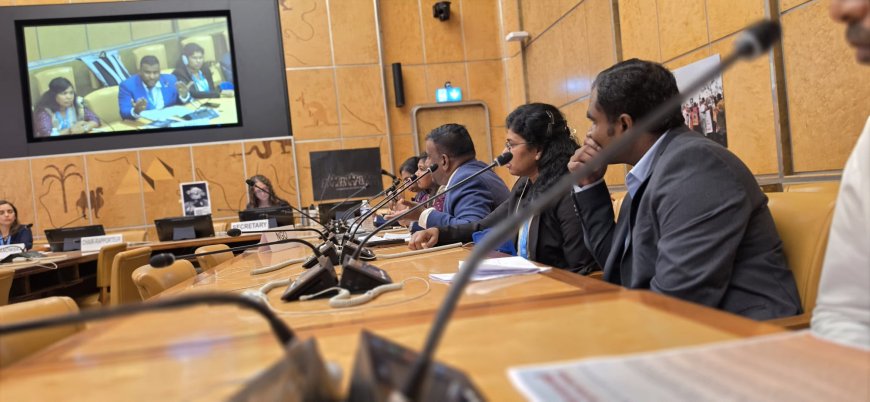
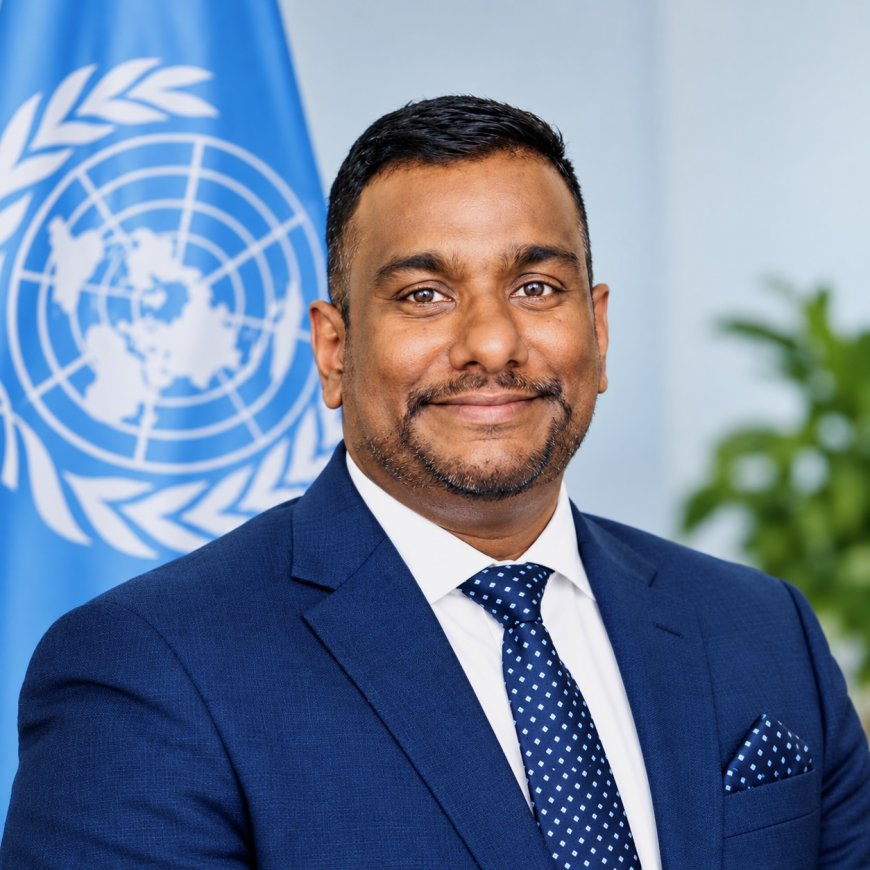 Laxmanan Sanjeev - Senior Legal Advisor to the ARED
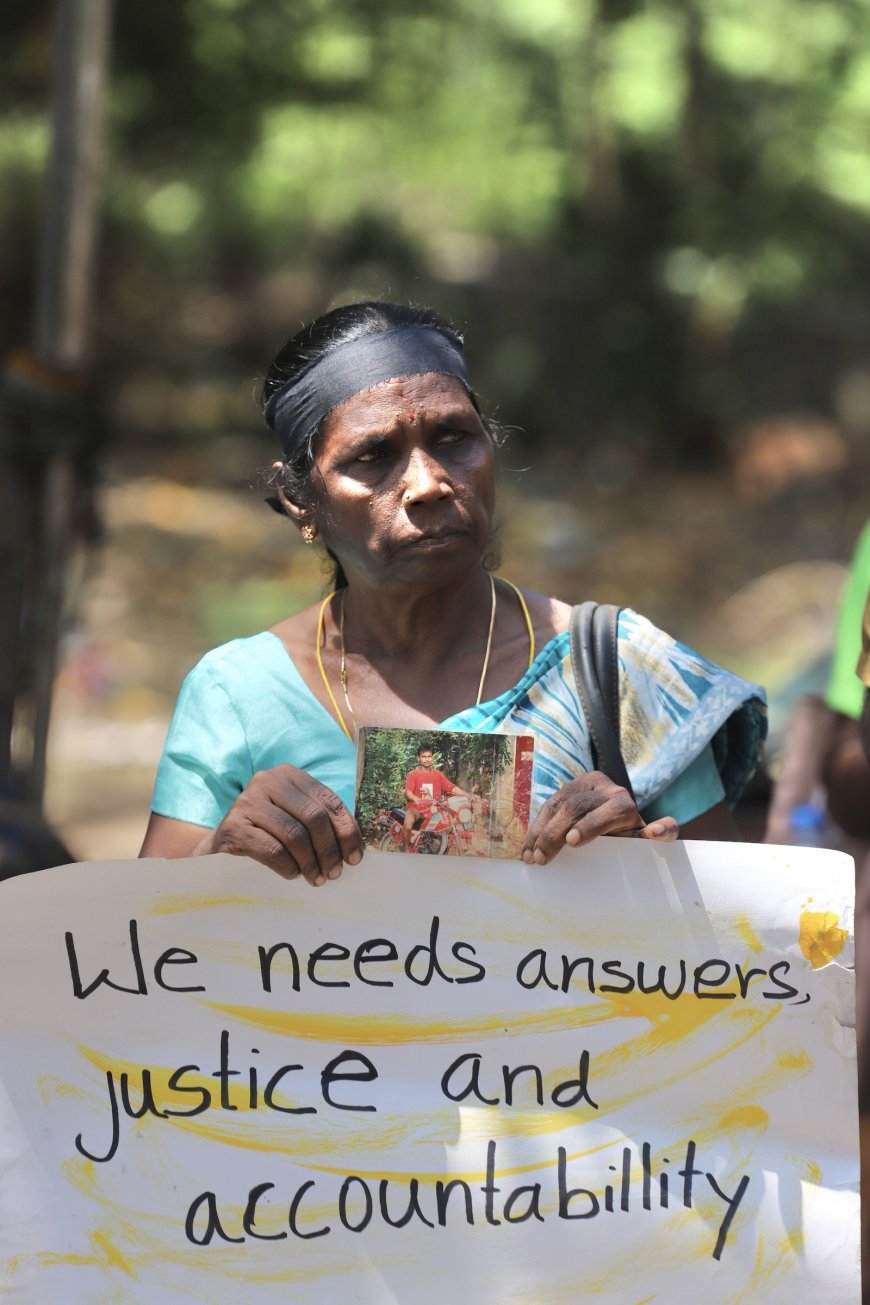
Enforced disappearances of Tamils by Sri Lankan security forces and associated state actors have been documented across decades of armed conflict and militarisation in the Tamil homelands. For families, the search for answers over missing sons, daughters, husbands and other relatives has continued across generations.
In the North-East of the island, Tamil families of the disappeared have maintained a sustained campaign for truth, justice and accountability, including through years of protests, complaints to state institutions, commissions of inquiry and engagement with international bodies. Yet many families continue to await credible answers concerning the fate and whereabouts of their loved ones.
The scale and longevity of the issue have made international human-rights mechanisms an increasingly important avenue for documentation, protection and accountability. The UN Working Group on Enforced or Involuntary Disappearances (WGEID), the Committee on Enforced Disappearances (CED) and the Office of the UN High Commissioner for Human Rights’ Sri Lanka Accountability Project (SLAP) each have distinct mandates through which individual cases, evidence and broader patterns can be brought to international attention.
Speaking to the Tamil Guardian, Laxmanan Sanjeev, International Human Rights Activist, Legal Advisor and Senior Advisor to the Association for Relatives of the Enforced Disappeared of the North and East of Sri Lanka (ARED), discusses what he believes should be the next phase of the organisation’s work.
Sanjeev outlines a strategy centred on systematic documentation, sustained engagement with UN mechanisms, preservation of evidence and the pursuit of accountability through national, international and foreign jurisdictions where legally possible. He also stresses that the families themselves must remain at the centre of any future accountability process.
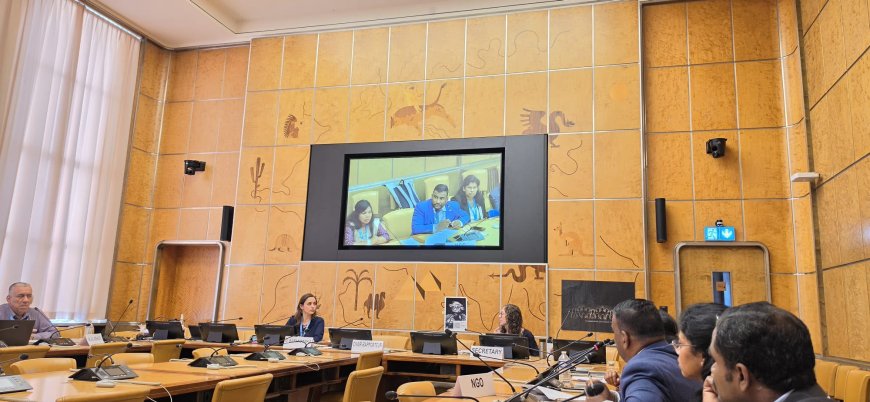
Q: After years of advocacy, what do you believe should be the way forward for ARED?
Laxmanan Sanjeev:
I believe ARED has reached a stage where our advocacy must become increasingly structured around international legal mechanisms, evidence preservation and sustained engagement with the United Nations human-rights system.
For many years, the mothers and relatives of the disappeared have been demonstrating, submitting complaints, meeting government institutions and approaching international actors. Their struggle has generated an enormous body of testimony, documentation and individual case histories.
The next phase should be about converting that body of experience and evidence into structured international human-rights documentation and accountability strategies.
For ARED, this means strengthening our engagement with three important UN avenues: the Working Group on Enforced or Involuntary Disappearances (WGEID), the Committee on Enforced Disappearances (CED) and the OHCHR Sri Lanka Accountability Project (SLAP).
These mechanisms have different mandates. Therefore, our approach should not be to use one mechanism for everything, but to understand the mandate of each institution and provide the information in a form that enables it to be effectively considered.
Q: Why is engagement with the Working Group on Enforced or Involuntary Disappearances particularly important?
Sanjeev:
The Working Group is fundamental to our work because its mandate is specifically focused on cases of enforced or involuntary disappearance.
ARED should develop a systematic programme of engagement with the Working Group rather than approaching it only on an ad hoc basis.
There are at least three important areas.
First — Individual Case Submissions
Every individual disappearance case should, where appropriate, be carefully documented and submitted through the Working Group’s established procedures.
This means developing a proper case file containing the identity of the disappeared person, circumstances of disappearance, date and location, alleged perpetrators or responsible institutions where information is available, previous complaints to domestic authorities, witness information and subsequent developments.
The objective should be to ensure that each disappeared person remains individually documented within the international system.
The UN’s established procedures allow information on disappearance cases to be submitted to the Working Group, including with requests concerning confidentiality.
Second — Incident and Pattern Reports
Individual cases are extremely important, but we also need to document patterns.
ARED should therefore periodically submit incident reports and thematic reports identifying patterns such as abductions, detention, alleged involvement of security forces or affiliated groups, intimidation of relatives, obstruction of investigations and reprisals against families or human-rights defenders.
A single case tells the story of one family. Properly documented cases can also help demonstrate broader patterns.
Third — Victims’ Communications Must Be Reflected
Most importantly, the voices of victims and families must remain at the centre.
The Working Group’s procedures should not become merely a technical exchange between institutions. The mothers and relatives need to understand what has been communicated, what response has been received and what further information is required.
ARED can play an important role as a bridge between the affected families and the international mechanism, while ensuring that the consent, confidentiality and security of victims are respected.
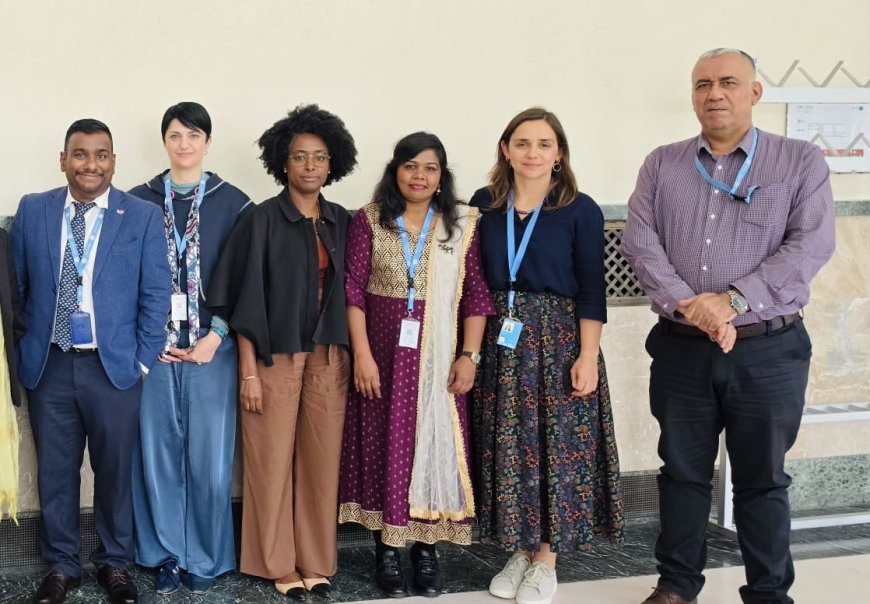
Q: Sri Lanka is a State Party to the Convention on Enforced Disappearance. How should ARED engage with the Committee on Enforced Disappearances?
Sanjeev:
This is another critical avenue.
Sri Lanka is a State Party to the International Convention for the Protection of All Persons from Enforced Disappearance, and the Committee on Enforced Disappearances monitors implementation of the Convention by States Parties.
Therefore, ARED should engage with the Committee not simply as an organisation submitting information, but as a victims’ organisation capable of providing structured, first-hand information on implementation of the Convention in Sri Lanka.
This includes information on: individual disappearance cases, investigations and prosecutions, access to information, the situation of relatives of disappeared persons, protection of victims and witnesses, reprisals and intimidation; access to archives and official records, reparations, truth-seeking mechanisms, guarantees of non-recurrence, and implementation of the Committee’s recommendations.
The Committee’s 2025 concluding observations are particularly relevant. It expressed concern regarding impunity for many conflict-era disappearance cases and noted that OHCHR’s Sri Lanka Accountability Project has a substantial repository of evidence concerning patterns of international crimes, including enforced disappearances.
That provides an important basis for continued engagement.
There is, however, an important legal distinction.
Sri Lanka has not accepted the Committee’s competence under Article 31 to consider individual communications. The Committee itself has invited Sri Lanka to make the necessary declaration.
That does not mean ARED should disengage from the Committee.
On the contrary, it means ARED should maximise the mechanisms that are available — particularly Article 30 urgent-action procedures, State reporting, information provided to the Committee, follow-up to concluding observations and engagement with Committee experts.
The Convention’s urgent-action procedure is specifically designed to seek urgent measures to search for and locate disappeared persons, and it can include requests for interim protection measures for relatives, witnesses and evidence.
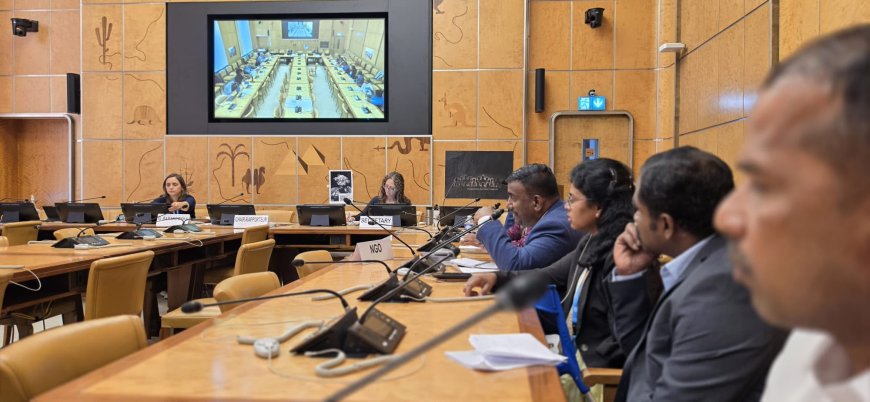
Q: What role should the Sri Lanka Accountability Project play?
Sanjeev:
I consider the Sri Lanka Accountability Project within OHCHR to be particularly important for the long-term accountability process.
The Human Rights Council established the strengthened OHCHR capacity through Resolution 46/1 to collect, consolidate, analyse and preserve information and evidence relating to gross human-rights violations and serious violations of international humanitarian law in Sri Lanka, while also advocating for victims and survivors and supporting relevant judicial and other proceedings where there is competent jurisdiction.
For ARED, this creates an important opportunity.
We should establish a professional and secure channel through which the experiences of the families can be brought to the attention of the relevant OHCHR structures.
ARED’s strength is its direct connection with victims.
Our mothers have been documenting their experiences for years. They possess information about disappearances, detention, alleged perpetrators, locations, witnesses, official complaints and subsequent interactions with authorities.
The responsibility now is to ensure that this information is preserved properly, verified where possible and presented in a legally useful manner.
The CED has itself noted the importance of the OHCHR accountability project’s evidence repository, including evidence relating to enforced disappearances.
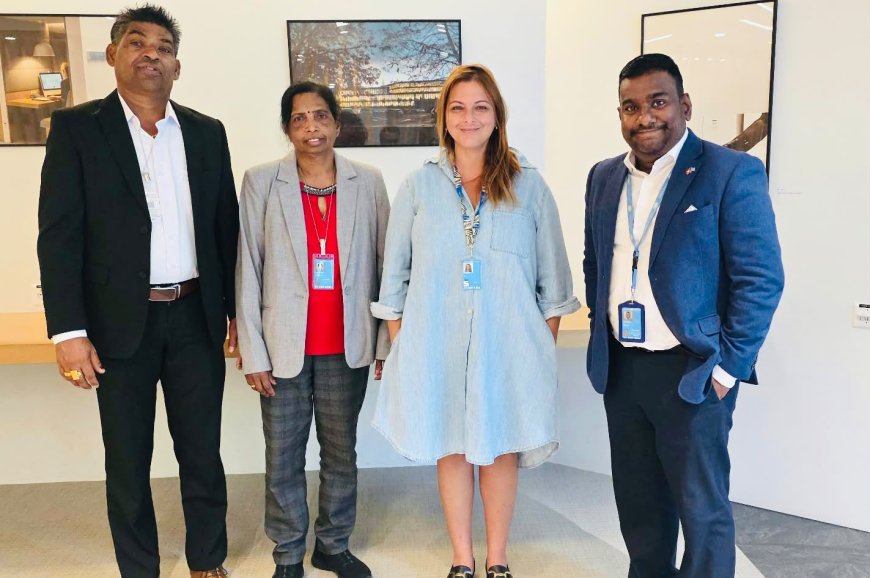
Q: Should the UN mechanism be strengthened further?
Sanjeev:
Yes. From a victims’ perspective, there is a strong case for strengthening international accountability arrangements.
The experience of the families demonstrates that documentation alone is not sufficient. There must be pathways from documentation to investigation, from investigation to accountability, and from accountability to remedy and guarantees of non-recurrence.
ARED should therefore continue advocating for stronger international engagement, including appropriate investigative capacity, effective victim and witness protection, access to evidence and meaningful participation by victims.
Where the mandate and political decision-making of the Human Rights Council permit, there should also be consideration of stronger dedicated international attention to the question of enforced disappearances in Sri Lanka, including mechanisms capable of following individual cases and broader patterns over time.
The objective should not simply be another report.
The objective should be to ensure that evidence does not disappear with time and that the victims’ search for truth remains connected to a credible international accountability process.
Q: You have also spoken about the possibility of pursuing cases before the International Criminal Court. What is your legal position?
Sanjeev:
We should not close any legitimate avenue of accountability.
However, this area requires considerable legal precision.
The International Criminal Court (ICC) prosecutes individuals for genocide, crimes against humanity, war crimes and aggression within the jurisdiction established by the Rome Statute.
Sri Lanka is not a State Party to the Rome Statute, so the ICC does not automatically have territorial jurisdiction over crimes committed in Sri Lanka merely because they allegedly constitute international crimes. The ICC has explained that jurisdiction can arise in certain circumstances involving nationals of States Parties, acceptance of jurisdiction by a non-State Party, or a UN Security Council referral.
Therefore, I would not present ICC litigation as an automatic or immediate legal route for every Sri Lankan disappearance case.
Rather, ARED and its legal advisers should examine whether particular factual situations and individuals could fall within an existing basis of ICC jurisdiction, including where applicable the nationality of alleged perpetrators, territorial jurisdiction arising from another State Party, an Article 12(3) declaration, or a Security Council referral.
At the same time, information relating to alleged international crimes can be relevant to other accountability processes.
The key is evidence.
Q: What should ARED be doing now in relation to evidence?
Sanjeev:
Evidence preservation should become one of our highest priorities.
We need to move from scattered documentation towards a centralised, legally structured case-management system.
For every case, we should ask:
Who disappeared?
When did the disappearance occur?
Where was the person last seen?
Who witnessed it?
Which authority was responsible for the detention or custody, if known?
What complaints were made?
What documentary evidence exists?
Who are the witnesses?
What investigations took place?
What was the outcome?
What information has subsequently emerged?
Are there risks to the family or witnesses?
We should preserve original documents, photographs, letters, complaints, court records, witness statements and other relevant material, while maintaining proper consent, confidentiality, chain-of-custody principles and data-security safeguards.
This is particularly important because international accountability mechanisms may examine evidence many years after the original events.
Q: What would be your message to the mothers and families of the disappeared?
Sanjeev:
My message is simple: our cases must not disappear from the international record.
The passage of time does not erase a disappearance.
Every mother who has stood on the road demanding to know what happened to her son or daughter represents not merely an individual grievance, but a continuing demand for the application of law.
But our advocacy must now become even more strategic.
We need to document every case properly. We need to engage the Working Group. We need to engage the Committee on Enforced Disappearances. We need to work with OHCHR and the Sri Lanka Accountability Project. We need to strengthen international legal networks. We need to preserve evidence for future accountability proceedings.
And above all, we must ensure that victims remain at the centre of the process.
Q: Finally, what is your vision for ARED over the next few years?
Sanjeev:
ARED should evolve from being primarily a victims’ advocacy organisation into an increasingly sophisticated victim-centred international human-rights and accountability network, while always retaining the leadership and voices of the families.
Our work should be built around four interconnected pillars:
1. Documentation
Every disappearance must be properly documented and preserved.
2. International Engagement
Systematic engagement with WGEID, CED, OHCHR, SLAP and relevant UN Special Procedures must continue.
3. Legal Accountability
Where legally viable, evidence should be developed for national, international or foreign-jurisdiction accountability proceedings, including universal-jurisdiction avenues where applicable.
4. Victim Protection and Remedy
No accountability process can be legitimate if families and witnesses are exposed to intimidation, reprisals or further harm.
Ultimately, our objective is not simply to create another archive of Sri Lanka’s past.
Our objective is to ensure that the truth about each disappeared person is preserved, that the rights of the families are recognised, that credible investigations can take place, that those responsible can be held accountable where the evidence and applicable law permit, and that effective guarantees of non-recurrence are established.
The mothers have already carried this struggle for generations.
The responsibility of the international community is to ensure that their evidence, their voices and their search for justice do not disappear with them.
Thank you - Tamil Guardian