Online Violence Against Women in Sri Lanka: Context, Challenges & the Role of the Online Safety Bill
Online violence against women is a growing human rights concern in Sri Lanka, disproportionately affecting women in public life. This article examines gender-based digital abuse, legal gaps before the Online Safety Act No. 9 of 2024, and the risks and limitations of the new law in addressing online harassment while protecting freedom of expression.
 editor
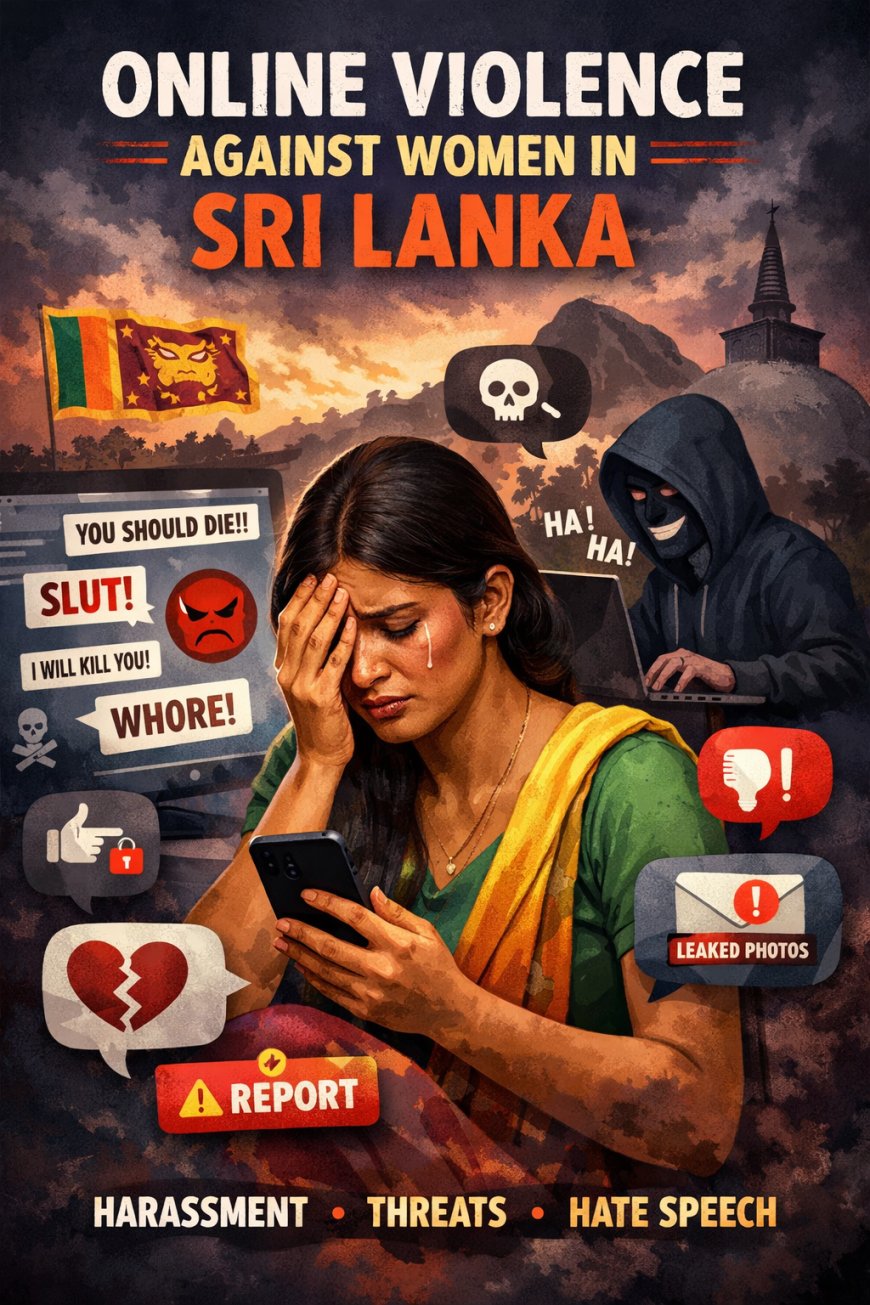
What Is Online Violence Against Women? Online violence against women refers to gender-based abuse and harassment that occurs through digital platforms — including social media, messaging apps, forums, and other online spaces. This can include:
Cyberbullying and harassment, such as insulting or threatening messages targeted at women specifically because of their gender.
Doxing, or publishing someone’s personal information without consent.
Image-based abuse and non-consensual sharing of intimate images (often called “revenge porn”).
Online defamation, hateful language, and coordinated trolling campaigns.
Women and girls, particularly those under 35, are often disproportionately vulnerable to such harms in digital spaces. The anonymity and reach of
online platforms can embolden perpetrators and amplify harm, causing psychological, reputational, and social damage.
In Sri Lanka, a growing number of reports and statements from rights institutions show that women — especially those in public life like politicians, activists, and professionals — face “alarming” levels of online abuse and harassment. This includes reputational attacks, doxing of personal data, and degrading content designed to silence or intimidate women from participating fully in civic and professional life. Such harassment erodes dignity and perpetuates systemic gender discrimination.
Sri Lanka’s Legal Environment & Online Violence Existing Laws Before the Online Safety Act Before the new Online Safety legislation, Sri Lanka’s response to online abuse was scattered across several laws that were often outdated or not specifically designed for digital harms:
Computer Crimes Act No. 24 of 2007: Targets unauthorized access and data tampering but does not explicitly cover gendered harassment or
cyberstalking.
Penal Code provisions: Some sections address sexual harassment and intimidation, typically in physical contexts and not tailored to digital
realities.
Human rights frameworks such as CEDAW and the Women Empowerment Act: These obligate the state to protect women from discrimination and violence, including in online contexts — but enforcement mechanisms are still being strengthened.
These gaps in effective digital protection contribute to under-reporting and weak legal enforcement, causing victims to have limited recourse when facing online violence.
The Online Safety Bill / Online Safety Act: What It Is
In January 2024, Sri Lanka’s Parliament passed the Online Safety Act, No. 9 of 2024, replacing an earlier draft known as the Online Safety Bill. The law establishes an Online Safety Commission with broad powers to regulate online content and remove what it deems “prohibited statements” from online platforms.
Under the Act:
The Online Safety Commission can direct intermediaries (platforms or service providers) to remove content, block access, or demand account
disclosures.
Individuals face significant penalties — including fines or imprisonment — for content judged to be harmful, threatening public order, or false.
Powers to interpret and enforce provisions are concentrated within the Commission and its appointed experts.
How the Online Safety Legislation Influences Violence Against Women?
Potential Benefits: Some proponents argue that the law could provide mechanisms to address certain forms of online abuse — for example,
non-consensual publication of private information or targeted harassment.
There are provisions within the Act that could be interpreted to apply to the publication of personal data intended to cause harm, potentially covering some gender-based digital harms.
Major Criticisms and Risks: Despite its stated intent to improve online safety, experts and civil society groups have raised serious concerns regarding the Act’s design and impact, especially in the context of gendered online violence:
1. Lack of Gender-Focused Protection
Critics note that the legislation does not explicitly or adequately address sexual and gender-based violence online — the very forms of abuse disproportionately affecting women. Instead, it uses broad categories like “harmful” or “false” content without specific safeguards for women and other vulnerable groups.
2. Risk of Censorship Over Protection
Human rights organizations including ARTICLE 19 and international legal watchdogs argue that the Bill and its Act may have a chilling effect on free speech and civic engagement. Broad and vague definitions increase the risk of arbitrary content takedowns, self-censorship, and misuse by authorities — potentially harming civil society advocacy rather than genuinely protecting vulnerable users.
3. Enforcement Challenges
The online safety framework places decision-making power in the hands of an appointed commission rather than judicial oversight, raising concerns about accountability in content moderation decisions and potential abuse of authority.
4. Implementation & Technical Gaps
Research findings suggest that enforcement mechanisms, technical expertise, and gender-sensitive implementation are lacking. Law enforcement and digital forensic capacity remain limited, undermining effective redress for victims of tech-facilitated gender-based violence.
Continuing Risks: Online violence continues to:
Deter women from participating in public life due to fear of harassment.
Silence survivors who lack confidence in reporting mechanisms.
Reinforce gendered stereotypes and power imbalances that make digital spaces unsafe for women. Legislative Reforms Needed: To effectively tackle online violence against women, advocates argue that Sri Lanka needs:
Clear legal recognition of tech-facilitated gender-based violence with gender-specific protections.
Specialized enforcement mechanisms including digital forensic and victim support services.
Gender-responsive policies and public awareness that target societal attitudes alongside legal provisions.
Transparency and accountability in content regulation, ensuring human rights are upheld while protecting women’s digital safety
Conclusion
Online violence against women (OVAW) has emerged as a serious human rights and gender equality concern in Sri Lanka, affecting women’s participation in public life, mental wellbeing, and access to justice. Women journalists, activists, politicians, and young women are disproportionately targeted through online harassment, image-based abuse, threats, and coordinated digital attacks. While Sri Lanka enacted the Online Safety Act No. 9 of 2024 to regulate harmful online content, the law has raised significant concerns regarding freedom of expression,
lack of gender-specific protections, and weak victim-centered remedies.
This policy brief highlights the nature of online violence against women in Sri Lanka, examines how the Online Safety Act influences this issue, and proposes key recommendations for gender-responsive, rights-based digital governance.
References
1. United Nations Special Rapporteur on Violence against Women. (2018). Report on violence against women in politics and public life. United Nations Human Rights Council.
2. UN Women. (2020). Online and ICT-facilitated violence against women and girls. UN Women Headquarters.
3. UNFPA Sri Lanka. (2023). Technology-Facilitated Gender-Based Violence Experienced by Women and Marginalized Groups in Sri Lanka. United Nations Population Fund, Sri Lanka.
4. ARTICLE 19. (2024). Sri Lanka: Concerns regarding the Online Safety Act and its impact on freedom of expression and human rights.
5. International Commission of Jurists (ICJ). (2024). Legal analysis of Sri Lanka’s Online Safety Act. ICJ Asia-Pacific.
6. Oxford Human Rights Hub. (2024). Gendered dimensions of Sri Lanka’s Online Safety Act: A critical analysis.
7. Volunteer Initiatives for Election Watch (VIEW). (2023). Digital rights, civic space, and democratic participation in Sri Lanka.
8. Sri Lanka Penal Code (as amended). Relevant provisions on sexual harassment, intimidation, and abuse.
9. Computer Crimes Act No. 24 of 2007 (Sri Lanka).
10. Convention on the Elimination of All Forms of Discrimination Against Women (CEDAW). United Nations Treaty Series.
11. Association for Progressive Communications (APC). (2019). Online gender-based violence: A global overview of trends and responses.
12. Human Rights Commission of Sri Lanka (HRCSL). (2022). Submissions and observations on digital rights and gender equality.
13. Daily Mirror / Daily FT / Daily Express (Sri Lanka). Selected reporting on online harassment of women journalists, activists, and politicians.
14. Internet Governance Forum (IGF). (2021). Best practice forum on gender and digital safety. (This article has been written under the activism programme addressing violence against women, implemented by the Ewing Independent Center for Women)
Keshayinie Edmund