China Merchants Port Exit Threatens Sri Lanka's Investment Image and Reputation : Warns BRISL Director
BRISL Director Maya Mayooran warns that the withdrawal of China Merchants Port Holdings from the US$392 million Colombo Port logistics hub could affect Sri Lanka’s reputation and future foreign investments.
 editor
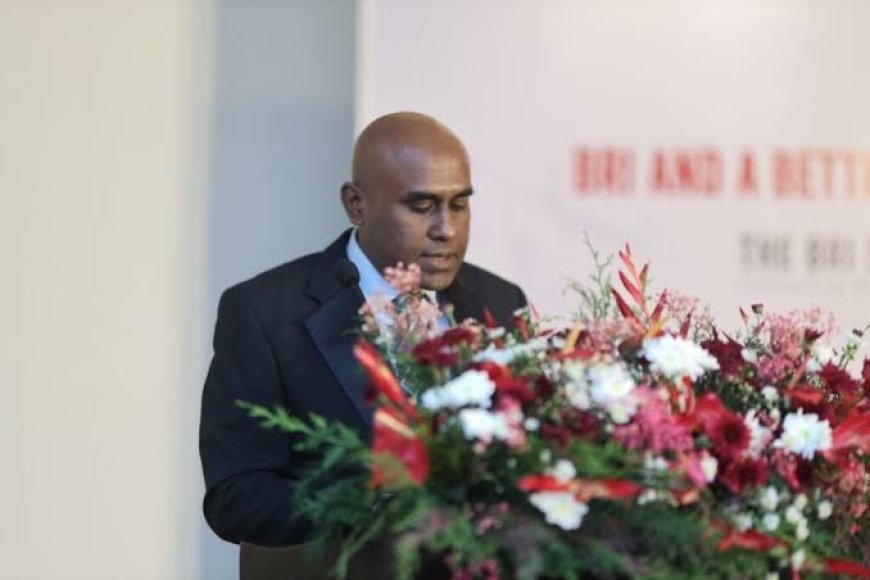
The withdrawal of China Merchants Port Holdings from a planned $392 million logistics hub project at the Colombo Port could negatively impact Sri Lanka's international reputation and its efforts to attract future foreign direct investment, according to Maya Majuran, Director of the Belt and Road Initiative Sri Lanka (BRISL).
Responding to questions regarding the project, he noted that disruptions and alterations to previously agreed-upon projects risk eroding the confidence of foreign investors seeking opportunities in Sri Lanka.
He further detailed:
The departure of the Chinese firm should not be viewed merely as the loss of a single logistics project. Such incidents create negative perceptions among the global investor community regarding Sri Lanka's stability.
If investors begin to perceive that established terms can be altered retroactively or that implementation faces persistent roadblocks, they will be hesitant to commit capital to Sri Lanka in the future. This damage to the nation's international standing will inevitably spill over into efforts aimed at securing foreign investments across other key sectors.
Geopolitical Pressures & Rival Promises
Multiple factors likely contributed to the withdrawal, chief among them being geopolitical pressures from nations such as the United States and India, alongside potential influence exerted through the International Monetary Fund (IMF).
Regional and global powers closely monitor the strategic benefits Chinese firms gain from managing major infrastructure projects in Sri Lanka, frequently creating hurdles for such ventures.
Majuran cited a similar precedent: a Chinese joint venture won a competitive tender—funded via an Asian Development Bank (ADB) loan—to construct hybrid solar and wind power installations on three islands off Jaffna (Delft, Nainativu, and Analaitivu). Following objections from India, the Sri Lankan government was urged not to proceed with the project, with India promising instead to fund and execute the initiative via grant assistance.
However, years have passed without that project being realized. When alternative promises made to stall foreign investment, projects are not fulfilled in a timely manner, Sri Lanka ultimately loses critical development opportunities.
The Sri Lankan government had initially awarded the $12 million contract for the renewable energy project on the three islands to the Chinese joint venture MS/Sinosar-Etechwin in January 2021.
Policy Consistency & Bureaucratic Hesitation
Sri Lanka can leverage its strategic position in the Indian Ocean to develop into a regional trade and logistics hub. To realize this potential fully, the country must maintain a balanced diplomatic stance and honor commitments made to foreign investors. While alternative proposals—such as Public-Private Partnerships (PPP)—may be suggested following the Chinese firm's exit, establishing new arrangements could take years, or the project may fail to materialize entirely.
The current administration appears hesitant in making decisive investment calls, while bureaucratic inertia continues to present hurdles for the private sector. Driven by the fear of corruption allegations and public backlash, the government seems inclined to avoid new initiatives and risk-taking altogether.
Capital Expenditure Delays and Fiscal Outlook
This risk-averse stance is reflected in fiscal execution: out of the capital budget allocated for development in 2026, only 30% to 40% had been utilized through September.
Of the Rs. 1,380 billion allocated for capital expenditure in 2026, just Rs. 385 billion—less than 30%—was spent over the first nine months. This underscores that the government is falling short in executing its obligations while avoiding necessary operational risks. If the government continues to struggle with attracting foreign capital and utilizing allocated development funds, the long-term economic consequences for Sri Lanka could be severe.
The Path Forward
When navigating relationships with major powers like India, the United States, and China, Sri Lanka must employ skilled negotiation tactics and balanced diplomacy to safeguard its national interests. Governance decisions must move beyond short-term political gains and align with the country's long-term economic strategy and investment potential. The exit of China Merchants Port is a significant setback for Sri Lanka. Retaining foreign investors and attracting new capital will require reliable policies, strategic negotiation, and consistent project execution.