Sri Lanka’s Apparel Exports Grow 3.47% in September, but Nine-Month Earnings Decline 5.52%: JAAF
Sri Lanka's apparel exports increased by 3.47% in September 2026 to US$416.99 million. However, cumulative earnings for January–September declined by 5.52%, according to JAAF.
 editor
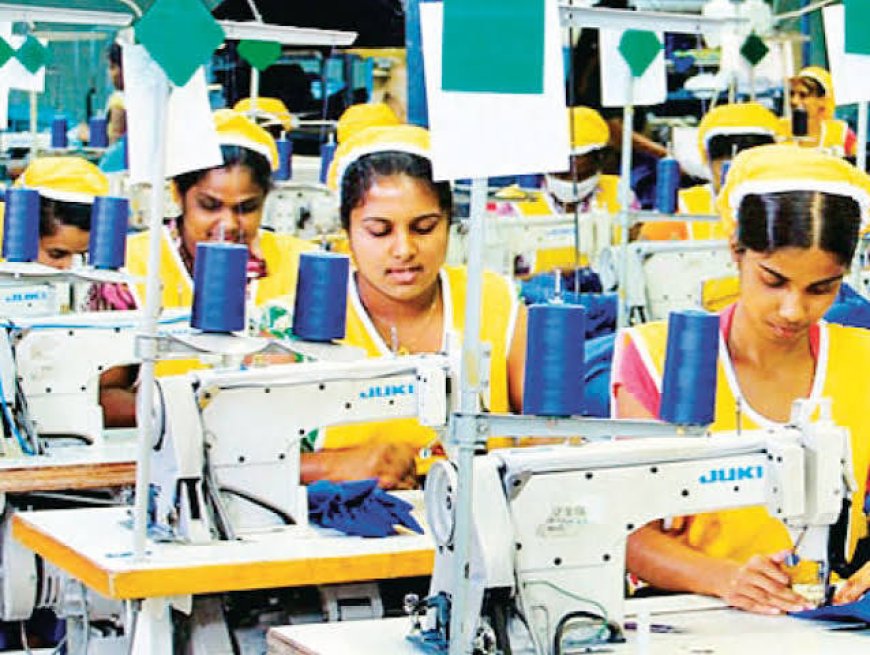
Sri Lanka’s apparel exports recorded a growth of 3.47% in September 2026, providing an encouraging sign for the industry. However, cumulative export earnings for the first nine months of the year remained below the level recorded during the corresponding period last year, according to the Joint Apparel Association Forum (JAAF).
Apparel export earnings for September 2026 amounted to US$416.99 million, compared with US$403.01 million in September 2025, representing a year-on-year increase of 3.47%.
The growth was primarily driven by Sri Lanka’s two largest export markets, the United States and the European Union.
Exports to the United States increased by 7.17% to US$172.03 million. Meanwhile, exports to the European Union, excluding the United Kingdom, rose by 6.5% to US$132.46 million.
However, performance across other international markets remained mixed. Apparel exports to the United Kingdom declined by 5.92% to US$47.33 million, while exports to other markets fell by 3.89% to US$65.17 million.
Nine-Month Export Earnings Decline by 5.52%
Despite the positive performance in September, cumulative figures for the first nine months of 2026 highlight continuing challenges for the industry.
Total apparel export earnings from January to September 2026 amounted to US$3,588.46 million, compared with US$3,798.25 million recorded during the same period in 2025.
This represents a decline of 5.52%, resulting in an export revenue shortfall of approximately US$210 million compared with the previous year.
The decline was reflected across all major international markets during the nine-month period.
Exports to the United Kingdom recorded the steepest decline of 10.85%. Exports to the European Union fell by 5.44%, while shipments to other markets declined by 5.43%. Exports to the United States also decreased by 3.69%, although this was the smallest decline among the major markets.
Intensifying Competition in Global Apparel Markets
Changing international trade patterns and evolving trade policies among major economies are reshaping the global apparel industry, creating additional challenges for Sri Lankan manufacturers.
According to US import data, Chinese apparel exports to the United States declined by approximately 34% during the first seven months of 2026, largely due to higher US tariffs.
In response to these developments, China and India have increasingly shifted their attention towards the European market, intensifying price competition in the region.
Between January and April 2026, China's share of total apparel imports into the European Union increased from 26.9% to 28.6%.
At a time when overall global demand remains subdued, the growing competition from China and India has made the European market increasingly competitive and challenging for Sri Lankan exporters.
Against this backdrop, Sri Lankan manufacturers will need to place greater emphasis on competitive pricing, reliability and product diversification to maintain their position in international markets.
Competitive Electricity Tariffs and Government Support Essential – JAAF
Commenting on the latest export performance, JAAF Secretary General Yohan Lawrence said:
"The growth recorded in the US and EU markets in September is highly encouraging. It demonstrates that our manufacturers can compete effectively when there is demand in the global market.
"However, we remain more than 5% behind the performance recorded during the corresponding period last year.
"For this positive monthly momentum to continue beyond a single month, our apparel industry urgently requires an uninterrupted electricity supply, affordable and competitive electricity tariffs, and a supportive government policy environment."
While JAAF considers the September performance an encouraging indication of improving demand in the US and European Union markets, the organisation cautions against viewing it as a full recovery of the industry.
With cumulative export earnings still significantly below last year's level, the sustainability of this positive momentum during the remaining months of the year will be crucial.
The industry will also be closely monitoring whether key markets, particularly the United Kingdom, which recorded a substantial decline, can return to a growth trajectory.